


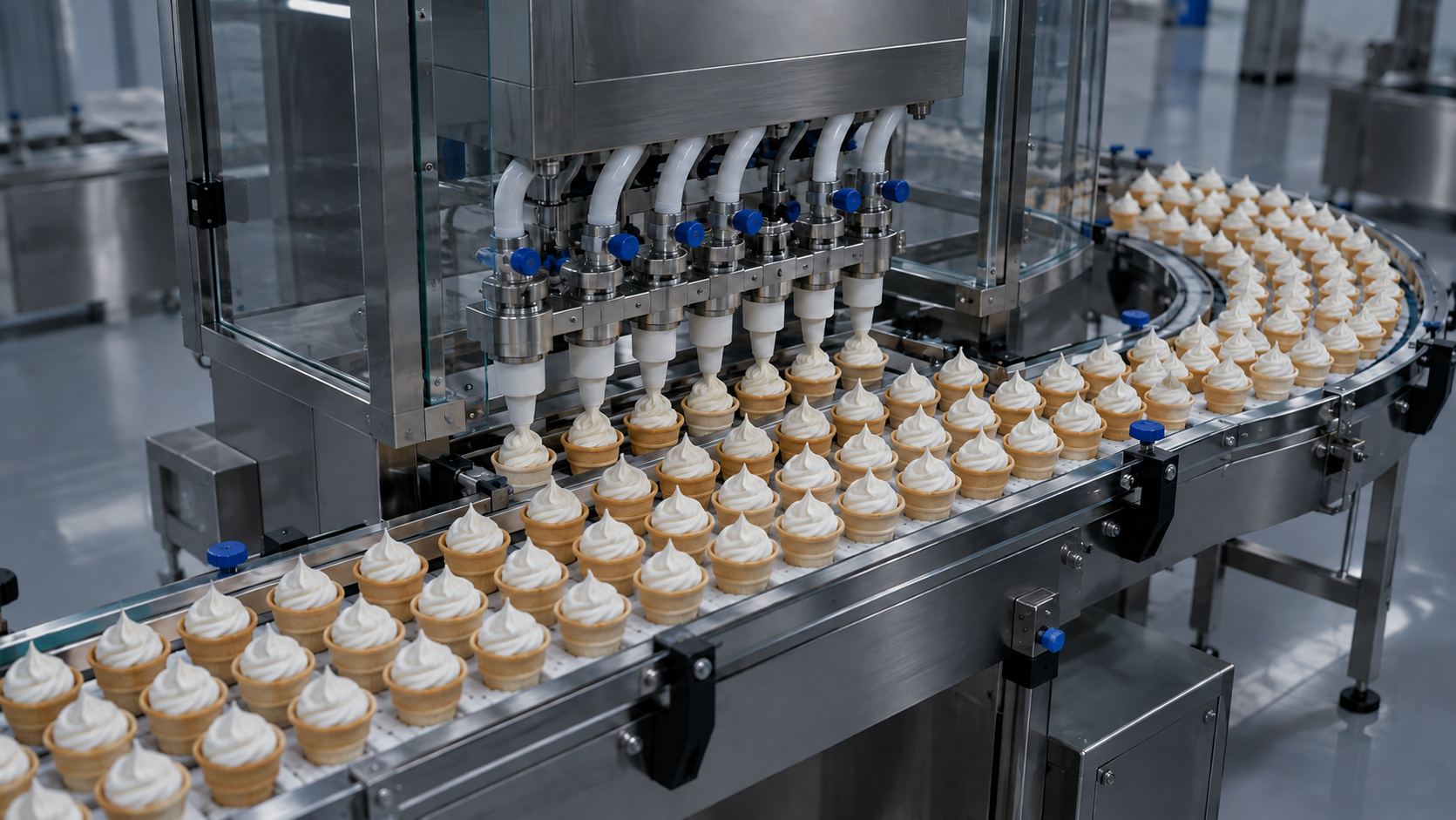
Hygiene aspects in ice cream production
Ice cream production involves strict sanitary standards similar to those applied at dairy plants, but it has its own unique features. The workflow is divided into two main areas: the mix preparation area and the packaging and freezing area. In the first area, the key elements are large containers and heat exchange equipment. In the second area, the product is pre-frozen in freezers, followed by rapid freezing at extremely low temperatures down to −42 °C. Such low-temperature production conditions help prevent the growth of microorganisms. Nevertheless, it is these same process characteristics that create certain difficulties in ensuring sanitation.
Problems of milk stone formation in production
Preventing deposit formation on equipment for dairy and ice cream production is important. Milk stone is difficult to remove, so preventive measures must be taken regularly. An effective solution is to include weekly acid treatment in the cleaning plan. Nitric acid-based formulations not only clean but also form a protective layer on metal surfaces. However, care must be taken in choosing concentrations to avoid corrosion. Alternatively, phosphoric acid products can be used, where the key is the choice of additives to improve wetting. Sometimes, to prevent deposits, it is sufficient to use acidified water at the end of the cleaning process.
Cleaning efficiency with water treatment
Water treatment helps optimise the cleaning process, reducing the build-up of deposits such as scale and shortening the time needed for cleaning. Despite the initial costs, high-quality water treatment pays for itself through improved equipment efficiency and lower cleaning costs. In ice cream production, pasteurisation units are a critical point, as proteins and fats accumulate on their surfaces, making cleaning more difficult. Alkaline products with caustic soda are used to remove the soiling. Adding sodium hypochlorite increases the cleaning power of the solution. Silicate-containing products tackle fat and proteins and prevent corrosion. Components such as phosphates soften water, while surfactants and complexing agents enhance the action of the alkali and improve surface wetting.
Optimal temperature parameters for equipment cleaning
When cleaning equipment, it is critically important to ensure the appropriate water temperature. It must be high enough to dissolve fats, but not so high as to damage refrigeration systems.
Equipment settings and condition
Attention must also be paid to the condition of the equipment. For effective cleaning, water should preferably circulate at a velocity of at least 1.7 metres per second. Any irregularities on internal surfaces can reduce cleaning quality and encourage the accumulation of dirt and the growth of microorganisms.
Freezer cleaning in ice cream production
An important aspect of ice cream production is the use of the freezer, which chills and shapes the product. Although this stage usually involves minimal soiling, regular cleaning is essential to maintain high ice cream quality. The internal parts of the freezer, made of chrome-plated steel or other coated materials, have a complex design that makes them difficult to clean. When choosing a cleaning method, whether CIP systems or manual soaking of parts, it is crucial to choose a detergent that will not damage sensitive surfaces. Chlorine-containing products or aggressive acids must not be used to clean chrome-plated and nickel-plated steel.
Cleaning cold rooms
Cold stores and freezing tunnels in production do not face heavy soiling thanks to low temperatures. However, cleaning them is difficult because of continuous operation and the impossibility of defrosting the equipment. It is important to choose a cleaning agent that is effective against light soiling for the stores and non-aggressive to non-ferrous metals for the tunnels. A cleaning agent free of chlorine and surfactants is preferable.
Disinfection fundamentals in ice cream production
To ensure product safety in ice cream production, it is extremely important to kill microorganisms such as Listeria, Salmonella and Enterobacteria. Chlorine-based disinfectants are often used because of their effectiveness, availability and speed of killing microbes. However, their interaction with treated surfaces must be monitored. For effective disinfection, a chlorine-containing solution with a concentration of at least 50 mg/l at a temperature of 25 °C or above and a contact time of more than one minute is recommended.
Alternatives to chlorine
Quaternary ammonium compounds (QACs) are gentle on treated surfaces and safe for workers; in addition, they have cleaning properties and their solutions remain stable over time. QACs require a concentration of at least 200 mg/l, a pH of no less than 5 and a contact time of at least one minute, followed by thorough rinsing. Products based on peroxyacetic acid and active oxygen are environmentally friendly, as they are biodegradable, and they minimise the number of cleaning steps when good-quality water is available. These products do not harm products or the environment when discharged.
Key aspects of sanitation in ice cream production
To ensure a high level of cleanliness in ice cream production, the preparation area must be strictly separated from the packaging area. Disinfection mats and thorough hand washing by staff are mandatory. In some cases, cold fogging systems are used. The hygiene strategy must be comprehensive, covering all stages from the receipt of ingredients to the storage of finished products. When choosing a contractor responsible for sanitary standards at the enterprise, it is important to consider its product range, the availability of the necessary products, and its ability to offer a professional approach to product selection and ongoing support. Sanitation issues can often be solved effectively after a comprehensive analysis and adjustment of equipment operation.